
Reusing figures
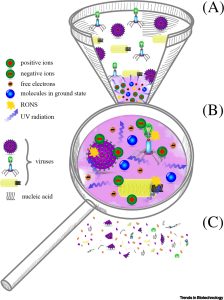
Just last week I stumbled upon this figure again. It is a figure from our joint review article (NIB National Institute of Biology, Slovenia and Jozef Stefan Institute) on inactivation of viruses using cold plasma, published in Trends in Biotechnology in 2020.
This happened at least six times over the years and these were just random stumbles. I do not know how many articles actually contain this figure.
I understand that Gregor Primc did such a great job making this figure that it was often reproduced.
Don’t get me wrong, the figure was always cited, so in theory that was ok, as it was published under an open access licence that allows it.
But I do wonder how acceptable that really is.
Because the author can spend hours, days even, preparing a figure, and then it is just copied and pasted, often in lower quality, in another journal, without any new input or added value.
Filipić et al., Cold Plasma, a New Hope in the Field of Virus Inactivation, 2020, Trends in Biotechnology, Volume 38, Issue 11, 1278–1291.
March, 2026
Can you see viruses?
With the naked eye – no.
With a regular, aka light microscope – also no.
How about with a more sophisticated instrument, let’s say a transmission electron microscope (TEM)?
Now we are talking.
We need such sophisticated equipment to see viruses, as they are very small, usually in the range from a few tens to a few hundred nanometers.
To put this into perspective, that is over a thousand times smaller than a grain of salt.
So how can we see viruses with TEM?
We can compare it to shadow puppets.
Imagine you are holding something very small.
You point a light beam through the item toward the wall and see a magnified shadow of the item’s shape.
By using TEM, we are doing a similar thing – just instead of light, we use electrons.
TEM is an extraordinary technology that enabled us to see viruses for the first time almost a hundred years ago.
It is also a technology that we often use at NIB to detect and observe viruses, among other things.
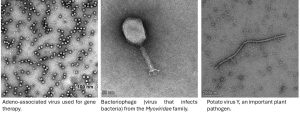
Below are micrographs recorded at NIB by Valentina Levak and Mojca Janc.
February, 2026
Virus bingo!
…is how I could describe this winter season 😂.
In Slovenia, there were, and still are, so many viral infections, especially respiratory ones.
But I want to talk about the viruses that often get overlooked
(unless you get them, then they are impossible to ignore): enteric viruses.
These viruses, which include noroviruses, rotaviruses and hepatitis A, cause millions of infections every year, around the globe.
As such, they present a high health burden.
Enteric viruses are called that because they pass through our gastrointestinal tract and still remain infectious.
As a result, they most often cause those “super fun” gastrointestinal symptoms like vomiting and diarrhea – bodily fluids through which they are efficiently transmitted.
So if you are sick, it is important to wash your hands and make sure that any other part of your body or the surfaces around you do not contain any excreted fluids.
This is because they will spread very successfully through direct contact or through objects you handle.
Even if you take immaculate care of your hygiene and your toilet, decontaminating every surface,
viruses may still remain in the air as aerosols and cause infection in that way.
So if you are sick, it is best to stay home (if possible, of course).
Since enteric viruses are also transmitted through water, it is essential to implement effective water decontamination strategies.
This is something we are trying to contribute to at NIB, and it is also part of my research:
using new, environmentally friendly technologies, like our SuperPlasma technology, to inactivate nasty viruses and help make our waters safer for everyone.
Because every drop counts! 💧
 January, 2026
Do you know that feeling when you do things in the lab and everything goes great… until it doesn’t?
That makes the two of us 😄
But keep in mind that an unexpected, maybe even weird or unwanted result, can lead to something great.
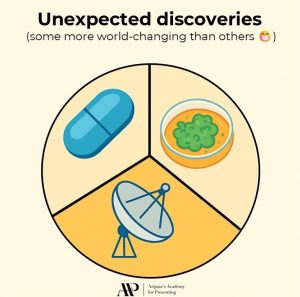
Did you know that the cosmic microwave background ✨, the first evidence of the Big Bang, was thought to be some unimportant background noise and was even believed to result from contamination of the antenna with bird droppings?
Or that mold 🧫, often indicating contamination, growing on Petri dishes led to the discovery of the first antibiotic, penicillin, a crucial milestone in medicine?
What about a pill originally tested to help deal with heart issues, but turned out to have some, ahem, rather unexpected side effect 😏, for which it is widely used today 🔵?
💡 So do not get discouraged by surprising results as they might just lead to something useful, even groundbreaking.
Keep exploring, keep asking questions, and keep bettering the world.
After all, some of the best discoveries started with a “what the heck just happened?”
October 2025
Can we “kill” a virus?
I often talk and write about inactivating viruses, something we do a lot at NIB using different methods: from cold plasma (with IJS) to chitosan (with the Faculty of Mechanical Engineering).
But what does it actually mean to inactivate a virus?
When we talk about living organisms, we can mention some of their wonderful characteristics like growth , reproduction, and generally functioning on their own.
Viruses, on the other hand, lack these traits.
What they do is sneak their way into a host cell (human viruses into human cells, plant viruses into plant cells, and so on) and hijack the cell’s machinery.
Once infected, the cell stops doing its normal job and starts producing viruses instead. Over time, this can lead to disease that can be quite severe, even fatal.
So basically, viruses need their host to do, well, anything at all (they’re quite needy like that).
But if we prevent viruses from causing disease, for instance by stopping them from entering cells or taking over the cell’s machinery, we’ve successfully inactivated them!
👉 So, to answer the main question: no, we can’t “kill” a virus, because technically it isn’t alive.
But we can absolutely inactivate them, and we’ve done so many times ✨
September 2025
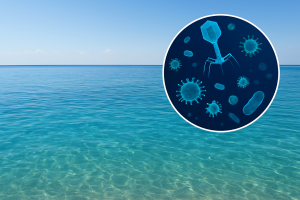
🌊 Have you ever swum in the sea so clear that it seemed empty?
But if we took a closer look (preferably under the electron microscope), we would see that this could not be further from the truth.
Because every drop is filled with life — microbial life 🦠.
There are millions of viruses in every milliliter of seawater (in addition to everything else).
But do not worry, most of them are the good guys, and they have important jobs to perform.
For instance, many of them are first-class nutrient cyclers. They destroy microorganisms such as bacteria, releasing nutrients like carbon, nitrogen, and phosphorus. The released nutrients are taken up by the remaining (and still happily living) bacteria and other prokaryotes. These are eaten by zooplankton, which are eaten by sea animals, and so on.
So, viruses in the sea are not only useful but crucial (they are responsible for the release of gigatonnes of nutrients every year 😮).
To understand what is happening in different matrices, at NIB (National Institute of Biology) we are searching for viruses everywhere. If we find some that are problematic, we inactivate them with our environmentally friendly technologies.
Do you know why we say that we inactivate and not, let us say, kill viruses? Stay tuned 😉
August 2025
✨ If you take a really close look at the video, you can see many small lights flashing in the darkness
It felt kind of like a red carpet. Or maybe an airplane runway. In any case, it was amazing.
I don’t remember the last time I was surrounded by so many fireflies. 🌌
🔬 How do they do it?
Through the magic of bioluminescence—the ability to produce light.
They use an enzyme called luciferase, which catalyzes a two-step process that results in the production of light.
To make it work, they also need oxygen.
By controlling the amount of oxygen, they control their flashes:
oxygen = light 💡
no oxygen = no light ⬛
🧠 Why do they flash?
For different reasons, including protection from predators (I am dangerous, do not approach) or to call their potential mate (single and ready to mingle) ❤️
🔁 Can they control their flashes?
Yes, they can regulate them based on outside light stimuli, even artificial light (maybe something to try next time you encounter them?)
This phenomenon is called entrainment, and it helps with their communication and mate attraction.
🌿 Nature, being amazing as it is, has quite a few organisms capable of producing light.
July 2025
What is the colour of the lake?
First thing that probably pops into your mind is blue.
But if you’re talking about the Pink Lake of Torrevieja in Spain, it can be – as the name reveals – pink!
What causes this?
Just some fantastic microorganisms doing their thing and being alive. 🦠
They include haloarchaea* and the algae Dunaliella salina, both of which fancy a little bit of salt – and they get plenty of it from the lake, which contains a high amount, similar to the salinity of the Black Sea. 🧂
When you combine this with lots of sun and high temperatures ☀️, these microorganisms start producing a pigment called β-carotene. This pigment acts like a knight in shining armor, protecting them from harmful radicals – and it also gives the lake its pink colour.
But that’s not all. This pigment also causes tiny shrimps to turn pink – and who eats these little shrimps? Flamingos! 🦩 That’s why their feathers turn pink too.
All thanks to these tiny, microscopic life forms.
Spain’s pink lake isn’t alone – these salty, colorful wonders pop up on almost every continent, giving scientists something fascinating to explore.
*Members of the archaea domain are in many ways similar to bacteria, but different in others – for instance, they’re often found in more extreme environments.

May 2025